Monday, 31 January 2011

Thriller Film Posters

Posters are a big part of promotion to a movie, and the way they look helps sell the film, as with any product.


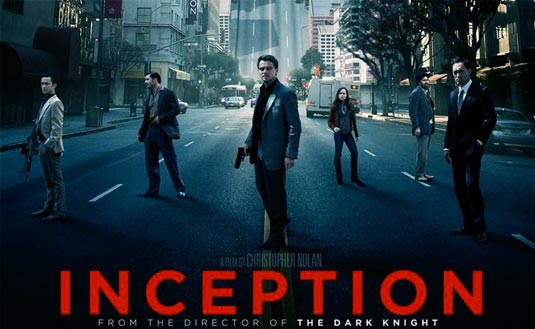
Inception (Christopher Nolan, 2010)


This poster for the recent film, 'Inception', is dark, eerie and it makes you ask questions, such as 'why are they there?', 'what is the film about?'. It shows that the main characters are prepared for something - that something is going to happen, and that they could be united as a team. The red title against the black, blue and grey background makes it stand out, and it's eye-catching. Also, it could mean 'danger' or 'anger', which could be a large part of the film.
The subtitle underneath 'From the director of The Dark Night', helps promote the movie even more, for example, if a person liked 'The Dark Night', then there is a larger chance they will enjoy this movie. The way in which the subtitle is written is also eye-catching.


Psycho (Alfred Hitchcock, 1960)

The poster for Alfred Hitchcock's Psycho is very eye catching,and surprisingly colourful for a dark, mysterious thriller movie. The colours go well together and contrast from one another. The yellow title helps catch your eye, as it is written in large, bold lettering, with a sort of cracked effect. The main character is tinted yellow, and the other two photographs are tinted red.
Alfred Hitchcock's name is written above the title in large white letters which contrast completely with the black background. 'A new- and altogether different-screen excitement!' is written near the main character's photograph. This could mean that, seeing as she is in her undergarments, the movie was a step into a new revolution of movies, and that this was quite erotic back in 1960.
A small list of cast and crew is running down the right-hand side of the poster in white on a purple background.


Blade Runner (Ridley Scott, 1982)

The poster for Blade Runner links to the prominent science-fiction aspect of the film, for example, there is large machinery near the bottom.
At the bottom section of the poster, Harrison Ford's name is above the title of the movie, in large white lettering, this could draw you in before the actual title of the movie, as it contrasts with the black background. The actual title of the film is written in an unusual font in red. Underneath that, in smaller, white text, is the director's name and the like.
The film could be reminiscent of old film noir movies, with a femme fatal, and dark lighting. The female character pictured is typical of the femme fatal auror, as she is smoking, and it was usually only the femme fatal characters in film noir movies who smoked, as this made them look more dangerous and mysterious.
The way in which the poster has been painted, instead of being photographed could add to the authentic feel of it. 
The slogan at the very top, right 'Man has made his match...now it's his problem' could give a little insight to what the film is actually about, and whether 'man' is going to overcome it.


Target Audience Of Thriller Movies

The target audience for the thriller genre can differ slightly with every sub-genre (for example, some people may be interested in political thrillers but not very interested in medical thrillers, perhaps.) Overall, however, thrillers are targeted at people who enjoy mystery and suspense, and people who like analysing situations and working out clues as to who the criminal is, and/or why they are doing what they're doing, etc. A main aim of the thriller genre is to 'put the audience on the edge of their seats', which means incorporating suspense, tension, eeriness, questions, apprehension and cliff-hangers into the plot-line.
I think, specifically, thrillers are aimed at either gender aged around 20+.

Script For Preliminary Task

Alice opens the door, walks into the room and sits down on the chair opposite Kirsty.


Alice: 
 How would you describe a Thriller film?

Kirsty: 
 A Thriller is based on tension and suspense, and they have a more action-packed feel to them.

Alice:  
What would you say is the difference between a Thriller and a Horror film?

Kirsty:  
A Thriller consists of more suspense than a horror movie. Horrors are much more involved in gore and violence rather than having a lot of psychological and realistic aspects.

Research Into Film Classification

There are many different factors that go into deciding what age certificate to give a particular film. For example, the amount of violence, crude language, drink and drugs references and erotic scenes are contained within the film. 


For example, a film will be classed as a '12' rather than a 'PG' if it contains things that may upset children, such as discrimination, infrequent use of drugs, moderate horror, imitable behaviour (although, easily accessable weapons should not be glamourised), moderate language, nudity (but sexual context must be infrequent), brief, infrequent sexual activity, and moderate violence. Films such as Batman are a 12.


A film will be classed as a '15' if the language content is more frequent, more violence, more horror, more frequent sexual content, drugs, more nudity with a more sexual context, more imitable behaviour, and more discrimination. Memento is a 15 rated film.


Certificate '18' films are only directed at adults, and they fit into this category because, the language content is more prominant, there is more sexual and violence context, discrimination is a lot more offensive, drugs are used a lot more, horror is more frightening, offensive language, imitable behaviour, nudity is mostly seen in a sexual way, sex is much more prominant, violence is a lot more realistic, etc. Se7en is an 18 rated film.

Wednesday, 26 January 2011

A History Of Thrillers

A thriller's main elements include suspense, tension and apprehension, and the main forms of thriller are mystery, crime and psychological. After the assassination of President Kennedy, political and paranoid thrillers became very popular. Audiences who tend to watch thrillers can accumulate clues and find out who, for example, was the murderer, etc.


Subgenres of thriller:

- Conspiracy thrillers,
- Crime thrillers,
- Disaster thrillers,
- Erotic thrillers,
- Legal thrillers,
- Medical thrillers,
- Mystery thrillers,
- Political thrillers,
- Psychological thrillers,
- Rape and revenge films,
- Religious thrillers,
- Supernatural thrillers,
- Techno thrillers.


Main characteristics of the thriller genre:

Thrillers tend to use cliffhangers and thrills to keep the audience (or reader) interested. Tension and suspense is a large factor within thriller films, and things such as sound, editing and lighting help to create a tense atmosphere within the scene, as well as the situation the character (or characters) has found themselves in. Death is also a large factor as many characters lose their lives in a thriller film.
Thrillers are known for usually taking place in urban areas, such as New York, etc, although it has been known for a thriller film to be set in other areas, such as polar regions and exoctic countries, or even the ocean. In many thrillers, the hero is usually an ordinary citizen who's life does not involve a lot of danger, however, in most crime thrillers in particular, the hero tends to be a harder, stronger character who is accustom to danger and the like.


Timeline of thriller movies:

1926:-
         - The Bat (Roland West)
         - The Bells
         - The Lodger (Alfred Hitchcock)

1928:-
         - Spies (Fritz Lang)

1929:-
         - Blackmail (Alfred Hitchcock)

1931:-
         - Charlie Chan Carries On (Hamilton MacFadden)

1932:-
         - Freaks (Tod Browning)
         - Tangled Destinies (Frank Strayer)

1934:-
         - The Man Who Knew Too Much (Alfred Hitchcock)

1938:-
         - They Drive By Night (Arthur B. Woods)
         - The Lady Vanishes (Alfred Hitchcock)

1940:-
         - Gaslight (Thorold Dickinson)

1942:-
         - L'Assassin Habite au 21 (Henri-Georges Clouzot)

1945:-
         - Spellbound (Alfred Hitchcock)

1949:-
         - Whirlpool (Otto Preminger)

1950:-
         - Side Street (Anthony Mann)

1953:-
         - The Hitch-Hiker (Ida Lupino)

1958:-
         - Elevator To The Gallows (Louis Malle)

1960:-
         - Psycho  (Alfred Hitchcock)

1963:-
         - Charade (Stanley Donen)

1966:-
         - Cul-de-sac (Roman Polanski)

1969:-
         - Z (Costa-Gavras)

1970:-
         - And Soon The Darkness (Robert Fuest)

1973:-
         - The Long Goodbye (Robert Altman)

1978:-
         - The Big Sleep (Michael Winner)

1980:-
         - Bad Timing (Nicolas Roeg)

1984:-
         - Blood Simple (Joel Coen)

1987:-
         - Extreme Prejudice (Walter Hill)

1990:-
         - Blue Steel (Kathryn Bigelow)

1995:-
         -  Assassins (Richard Donner)

1999:-
         - Fever (Alex Winter)

Monday, 24 January 2011

More Exploration Into Thrillers

Aims: -

'What makes a good thriller opening?'

- Look at thriller openings,
- Think about examples of students' films,
- Look at mark scheme


Leon (1994)

- Describe camera movement and what it means.

Panning and tracking - this adds tension and establishes where the scene is taking place. The scene then cuts straight to the glass.
Shows the sign for 'Little Italy', which could link and emphasis the large crime aspect in the film.
Tracking shots of characters show their importance to the plot.


- Describe the types of shots used, including close ups.

Close up shots intensify the moment, they also obscure the identity of certain characters, which adds mystery. Mid-shots are also used on the criminals to show who they are and to include several of them in one shot.


- What props or objects are used and why?

Guns, knives, drinks, money.
The drink of milk could contrast against the character, its not something that you would expect a menacing hitman character to drink. It adds to the sinister feel.


- Describe the camera angles, e.g., on the hotel stairs, etc.

There is a shot looking up and down the spiral staircase. This could establish the sense of despair that the character is feeling at that time. It could also show how far he has to fall when he gets pulled over the banister.

Planning The Opening Sequence To Thriller

Group Members:
  • Pip Greenroyd
  • Alice Oakley
  • Kirsty Davies

Planning:

For the opening sequence for our thriller, our group has decided to focus on the themes of Film Noir and murderous passion. Because of this, we have decided to film our clip in black and white, which gives a sinister and mysterious vibe. Our main idea will be focusing on a man who has cheated on his wife, the wife then finds out and kills him. At present we are discussing how the man could be killed, we feel that the man could be poisoned or shot.
Recently we have watched film openings from 'One Hour Photo' and 'Leon' which focus around one particular item, and we decided that this was an effective technique and created a sinister atmosphere, so we through a wedding or engagement ring could be the prominant item within our film. It could emphasise the theme of being unfaithful.
The camerawork that we have recently discussed included close up and extreme close up shots to create a sinister, identity concealing vibe, and it also portrays emotion. We also thought we could use tracking shots as it makes characters seem more important, and it also makes it feel as though the camera is hunting the character.